


Ester outlines roadmap for high-barrier, circular packaging materials
Ester Industries’ chairman and managing director, Arvind Singhania, discusses how materials science, food-grade rPET, and large-scale recycling investments are shaping the company’s strategy for sustainable packaging.
04 Mar 2026 | By Sai Deepthi P

Ester Industries’ chairman and managing director, Arvind Singhania
Sai Deepthi (SD): How do you see the packaging industry evolving?
Arvind Singhania (AS): The packaging industry is moving decisively toward solutions that combine performance, sustainability, and regulatory compliance. Brand owners today are under pressure to reduce food waste, meet recycled-content mandates, and improve recyclability without compromising shelf life, safety, or consumer appeal. This has fundamentally reshaped material selection and packaging design.
SD: What role is Ester playing in driving innovation to meet emerging market needs?
AS: Ester’s role in this transition is rooted in materials science–driven innovation. Our polyester films are engineered to deliver precise gas and moisture barrier control, helping preserve freshness and extend shelf life across fresh produce, retort foods, and FMCG packaging. At the same time, we are rethinking packaging structures to address recyclability challenges. Our mono-material PET films and rPET laminate solutions simplify recycling while retaining the durability and clarity required for demanding applications.
Where higher protection is essential, we offer transparent high-gas-barrier films, boilable barrier films, and ultra-high barrier metallised films designed for retort pouches and long-shelf life products. Importantly, we integrate sustainability into performance by offering films with customised PCR content ranging from 30% to 100%, including food-grade options. By combining advanced R&D, scalable manufacturing, and real-world application knowledge, Ester is enabling brands to future-proof their packaging strategies in an increasingly sustainability-driven market.
SD: What are Ester’s key priorities in advancing sustainable packaging and circularity?
AS: Our sustainability strategy is anchored in one clear priority: enabling circularity at scale without compromising performance or safety. To achieve this, we are investing across the entire value chain from recycling infrastructure to product design and customer adoption.
A cornerstone of this approach is our joint venture, Ester Loop Infinite Technologies (ELITE), with Loop Industries. ELITE will process polyester textile waste and PET bottle scrap to produce 70,000-tons of virgin-quality recycled polyester chips annually, enabling textile-to-textile, textile-to-bottle, bottle-to-bottle, and laminate-to-laminate recycling. This technology allows even complex polyester waste to be recycled infinitely/repeatedly, supporting true circularity and global decarbonisation goals.
SD: Can you tell us about your mechanical recycling facilities?
AS: Complementing the chemical recycling plants, we also have our mechanical recycling facilities at Sitarganj (8,000-TPA) and Hyderabad (20,000-TPA), which together deliver 28,000-TPA of food-grade rPET capacity. These facilities supply high-quality recycled resin for Ester’s packaging films, reducing dependence on virgin materials. Equally important is our product innovation, patented mono-material laminate technologies, recycled-content films, and high-performance rPET solutions that meet global regulatory standards.
SD: Could you share developments and customer demand trends around food-grade and high-barrier packaging materials?
AS: Demand for food-grade and high-barrier packaging materials has accelerated sharply, driven by stricter food safety norms, longer supply chains, and sustainability mandates. Customers and brand owners today want packaging that preserves freshness, meets regulatory standards, and incorporates recycled content without sacrificing clarity or performance.
SD: How is Ester addressing demands from customers?
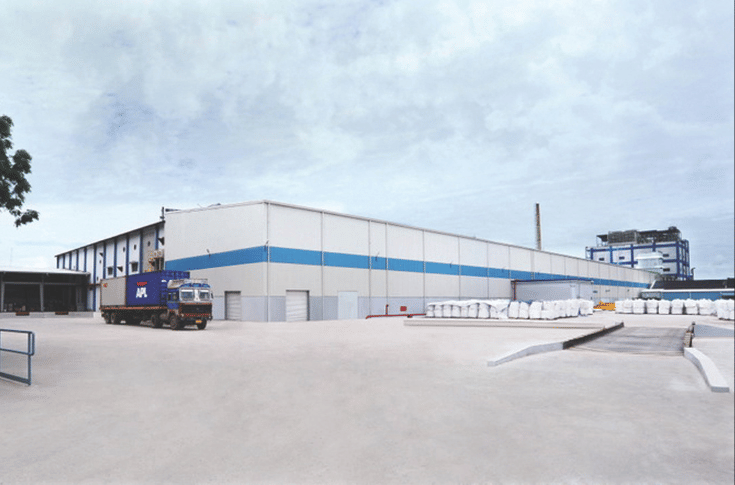
AS: Ester is addressing this demand through a combination of advanced recycling technology and high-barrier film innovation. At our Hyderabad facility, we operate a 20,000 TPA food-grade rPET recycling plant, using the Gneuss OMNI 200 system. This technology enables direct processing of post-consumer PET into food-safe resin without pre-drying, preserving polymer integrity while achieving fine filtration down to 16–20-microns critical for BOPET film applications. On the barrier side, our portfolio includes transparent high-oxygen-barrier films, metallised ultra-high-barrier films, and boilable barrier films for retort and long-shelf-life applications.
These materials are widely used in ready-to-eat foods, FMCG packaging, and bag-in-box solutions where durability and product safety are paramount. Crucially, many of these solutions can be produced with food-grade recycled content, helping customers meet both sustainability and regulatory objectives. This integrated capability differentiates Ester in a rapidly evolving packaging landscape.
SD: How does Ester collaborate with customers and ecosystem partners to co-create packaging solutions?
AS: Collaboration is central to how Ester innovates. Packaging challenges today are complex, balancing recyclability, cost, performance, and compliance, and they cannot be solved in silos. We work closely with brand owners, converters, and ecosystem partners to co-create solutions that are both technically sound and commercially viable.
Our customer engagement typically begins at the application level. Whether the need is extended shelf life, downgauging, mono-material conversion, or food-grade compliance, our teams collaborate on material selection, structure design, and performance validation. This co-development approach allows us to tailor gas transmission rates, barrier properties, and post-consumer recycled (PCR) levels to specific use cases. We also partner with technology providers to strengthen our circularity capabilities.
By aligning material science expertise with customer objectives and downstream recyclability needs, Ester reduces transition risks for customers and shortens the path from innovation to commercialisation, making sustainable packaging a practical reality rather than a future aspiration.
SD: What is Ester’s perspective on the current regulatory landscape, including EPR and sustainability norms?
AS: Ester’s approach is proactive. Our recycled materials are produced using FSSAI-compliant, food-grade systems, with facilities certified under FSSC 22000, ISCC Plus, and GRS 4.0. This ensures full traceability, safety, and compliance across domestic and export markets. Our patented rPET technologies deliver near-virgin quality recycled PET, making them suitable for high-clarity, food-contact applications. Additionally, our mono-material PET laminate solutions help customers meet recyclability requirements under India’s Plastic Waste Management Rules and similar global frameworks.
SD: How is the organisation preparing for future compliance?
AS: Through ELITE, we would also enable global brand owners to meet recycled-content and decarbonisation targets at scale. With exports to over 50 countries, Ester has built the agility to adapt quickly to regulatory shifts. By embedding compliance into product design and manufacturing, we help customers stay ahead of evolving sustainability norms.
SD: Looking ahead to 2030, what is Ester’s long-term vision for packaging?
AS: By 2030, we envision Ester as a global leader in sustainable, high-performance packaging materials where circularity, scalability, and innovation converge. The future of packaging will demand materials that protect food, reduce waste, and operate within closed-loop systems, and we are investing today to lead that future. A defining milestone in this journey is ELITE, which will enable large-scale chemical recycling of any kind of polyester waste into virgin-quality materials for global markets. This positions Ester at the forefront of textile-to-textile and bottle-to-bottle circularity, supporting decarbonisation across industries.
SD: What investments and innovations will shape that journey?
AS: We are expanding capacities at Khatima and Hyderabad to meet rising demand for high-barrier films, food-grade rPET, and speciality packaging solutions. Our R&D engine, supported by 19 granted patents, will continue to focus on mono-material structures, high-performance recycled content, and next-generation barrier technologies. By combining advanced recycling, patented materials, and global manufacturing scale, Ester aims not just to participate in the future of packaging but to actively shape it responsibly, sustainably, and at scale.