


Exclusive: Fuji Robotics targets the Indian eCommerce boom at Interpack
Fuji Robotics utilises Interpack to showcase its legacy in four-axis robotics, a sector the company has pioneered since it introduced its first palletising robot in 1982. Bob Zwolinski, business development manager at Fuji Robotics shares the company’s focus in expanding its presence in the eCommerce industry
08 May 2026 | By Abhay Avadhani

Bob Zwolinski, business development manager at Fuji Robotics
Fuji Robotics began its journey by launching its first robotic solution in 1982 in Yamaguchi, Japan. Over the four decades, the company established a global footprint, importing and shipping its four-axis robotic systems from its Japanese manufacturing base to production lines worldwide.
Bob Zwolinski, business development manager at Fuji Robotics, says the industry is shifting toward rugged, non-intimidating automation to resolve manual labour shortages and ensure 24-7 production consistency.
Manufactured in Yamaguchi, Japan, the systems are designed for extreme durability, with Zwolinski comparing the machinery to high-reliability Toyota vehicles that can operate for 20 years without intervention. This reliability is positioned as the central solution for converters and brand owners facing rising absenteeism or the physical limitations of manual handling.
Zwolinski says that robotic solutions allow customers to run as continuously as possible. Unlike human workers, robots do not experience health issues or require holidays, ensuring the stability of the production line. He says, “Especially during and after the pandemic, we found a unique need for this level of continuous operation.”
Handling heavy-duty substrates
The company’s portfolio caters to various segments, including food, agriculture, and eCommerce. Zwolinski describes the robots as the pickup trucks of the industry, capable of performing in dusty, hot, or cold environments that would be challenging for manual workers. The systems are particularly effective for handling heavy loads, such as bags weighing 25-kg or 50-lb, which traditionally required manual effort.
While competitors often utilise complex six-axis software, Fuji Robotics maintains a four-axis programming approach. Zwolinski says this prevents the technology from being intimidating for operators. “We do not try to make it complicated. Our software and programming are very straightforward. If it is not broken, do not fix it,” he adds.
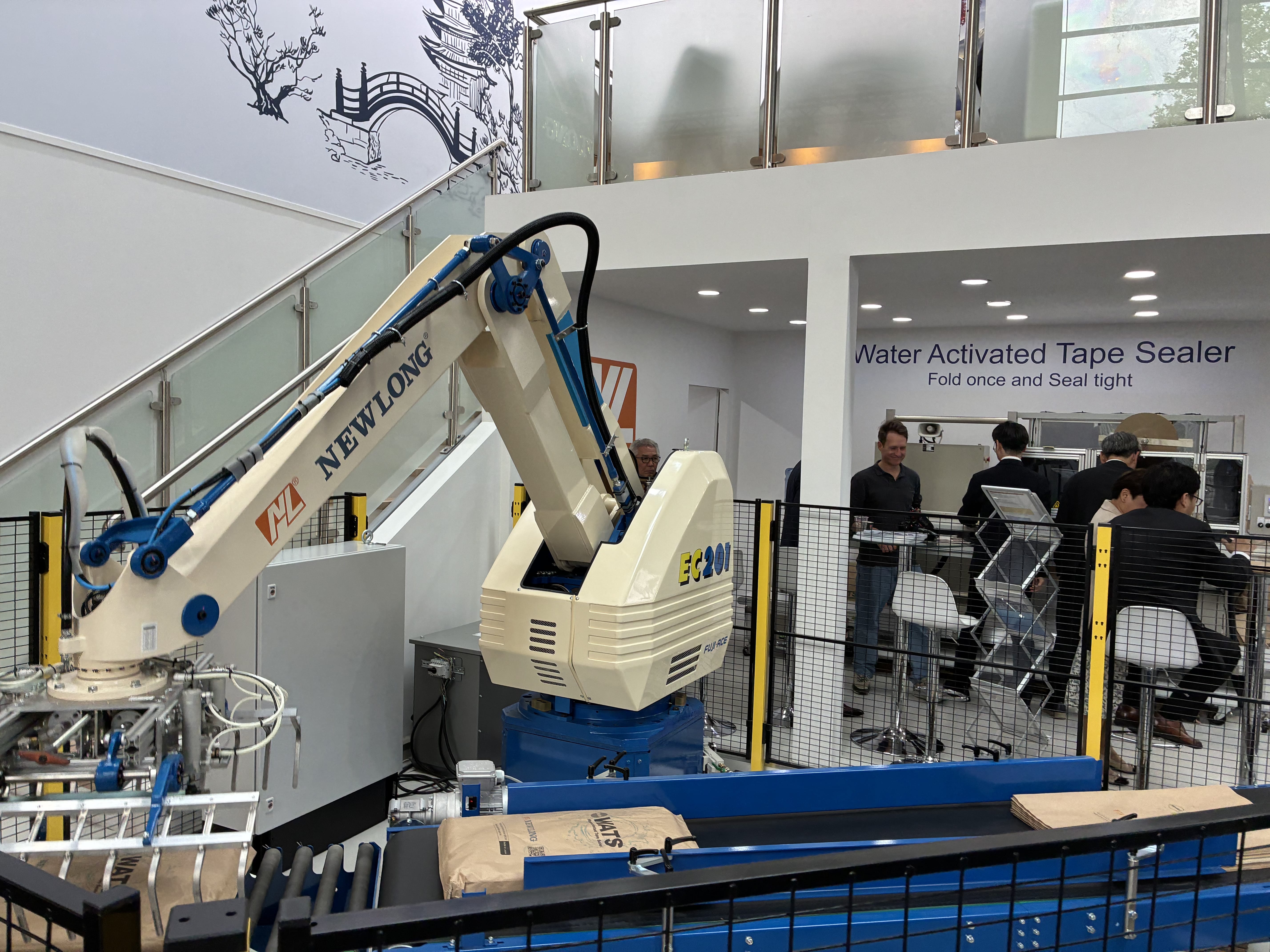
Zwolinski describes the robots as the pickup trucks of the industry
Logistics and eCommerce expansion
One of the most significant challenges for a brand has been integrating automation into high-velocity facilities that operate 24 hours a day, such as Amazon fulfillment centres. Zwolinski notes that installing robots in such environments requires intense coordination to avoid production stoppages. The strategy involves accumulating inventory for a one-day window, followed by a rapid, disciplined installation completed within a single 24-hour cycle.
This focus on logistics is part of a broader push into the eCommerce sector, which Zwolinski identifies as a lucrative growth market. To support this, the company plans to release its latest robot model, the EC202, in October 2026 at Pack Expo in Chicago.
The automation pipeline
Addressing the Indian market's focus on reducing manual intervention, and the AI intervention, Zwolinski says the investment climate remains positive. While the company does not see an immediate application for AI in its current mechanical systems, the focus remains on long-term pipeline development to sustain automation projects that often involve long lead times.
He describes Interpack as the Super Bowl, or fishing. “You have to show up because you never know when you will catch the biggest fish,” he concludes. The company’s goal is to ensure it has enough in the pipeline to focus on the next fiscal year and beyond.