


HNGIL bets big on decarbonisation technologies for the glass industry
Following the acquisition by INSCO, Hindustan National Glass Industries (HNGIL) looks optimistic with its initiatives towards a circular glass economy. Kumar Krishnan, managing director in a conversation with the WhatPackaging? team
15 Mar 2026 | By Abhay Avadhani

Kumar Krishnan: Manufacturers are investing in hydrogen blending, electric boosting, waste heat recovery systems, renewable power sourcing, and higher cullet usage
With over seven decades of experience, the glass manufacturing major supplies to more than 23 counties through its plants located at Rishra, Bahadurgarh, Rishikesh, Neemrana, Sinnar, Naidupeta and Puducherry.
According to Kumar Krishnan, managing director, Hindusthan National Glass Industries (HNGIL), the Bahadurgarh unit is currently operating at approximately 35% capacity. The new management has committed to restoring all non-working furnaces and ramping up the facility to 100% capacity through furnace refurbishment, operational optimisation, and workforce engagement.
In February 2026, HNGIL successfully re-commissioned the glass furnace at its Puducherry plant. At the same time, the company commissioned two other furnaces one each in Rishra - West Bengal and Rishikesh - Uttarakhand. Rishra is set to have two additional furnaces that will start by the middle of 2026.
The Puducherry unit has a nominal furnace capacity of about 330 tonnes per day (TPD). It is expected to stabilise at approximately 270 TPD, and operating four production lines serves the southern beer, beverage, food, and pharmaceutical packaging markets.
Looking at India through the glass lens
Krishnan believes that India’s container glass sector is holding up better than many “traditional” industries because it sits right at the intersection of sustainability-led packaging shifts and fast-moving end-markets like spirits/beer, food, and pharma.
He says manufacturers are now investing in furnace modernisation, energy efficiency, automation, and decarbonisation technologies to remain competitive. However, he adds, “The industry remains energy-intensive, making margins sensitive to fuel and power costs. The recycling infrastructure for consistent cullet supply is still developing in India.”
Challenges and opportunities
Krishnan also believes that India’s glass industry is well-positioned for a circular economy because glass is infinitely recyclable and the country already has a strong scrap collection network, supported by high consumption in the alcohol sector.
However, implementation faces challenges such as poor source segregation, colour contamination, inconsistent cullet quality, logistics costs due to glass weight and low scrap value, and limited deposit-return systems.
“While recycling infrastructure exists, it is fragmented and informal, lacking traceability and quality standardisation. The key opportunity lies in formalising and digitising collection networks, building regional cullet processing hubs, leveraging AI-based sorting technologies,” says Krishnan.
He adds, “HNGIL will invest in light weighting of its container, work closely with its customers to improve recyclability and extend the life of containers.” With its experience in “narrow neck press and blow” (NNPB) technology over years, Krishnan believes the company senses a huge opportunity in the Indian market.
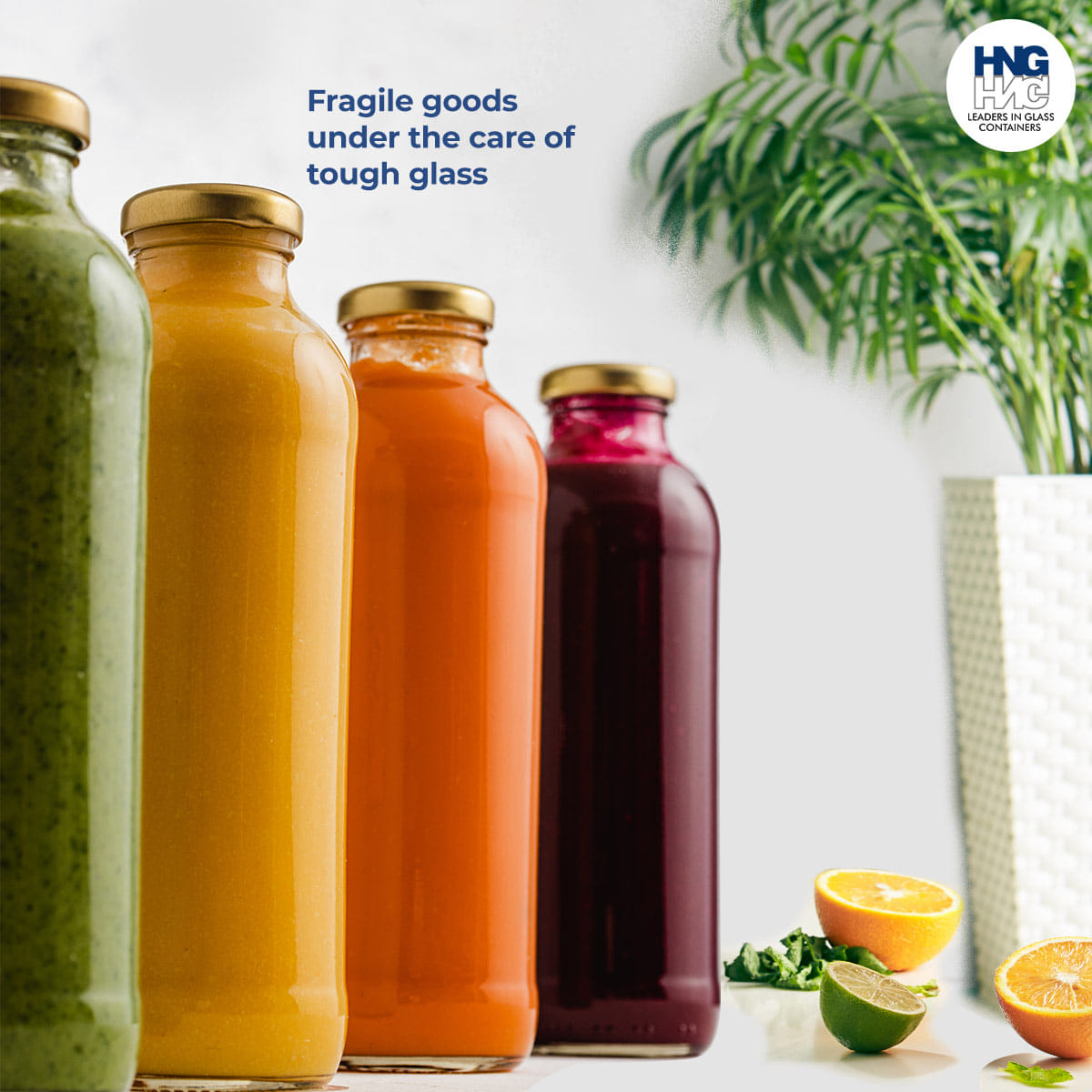
With its experience in “narrow neck press and blow” (NNPB) technology over years, Krishnan believes the company senses a huge opportunity in the Indian market
Regulatory acceleration towards circular economy
A positive push in terms of governmental policies and regulations play an important role in a transition towards a more circular glass industry in India. Krishnan concurs, “Clear, enforceable glass-specific EPR targets would compel brands to invest in collection infrastructure, while state-level deposit-return systems could improve clean, colour-segregated bottle recovery.”
He says that financial incentives such as capital subsidies for cullet processing plants, tax benefits for higher recycled content, and support for renewable energy use in furnaces would address the industry’s key economic constraints. Additionally, he says, formalising and digitising the informal scrap ecosystem would improve traceability and quality without disrupting existing networks.
The HNGIL way
According to the company, when it comes to meeting circular targets, the key measure currently is the % of external cullet used per tonne of glass produced. Krishnan adds, “Meeting circular targets in India’s glass industry is challenging due to structural issues rather than technological limitations.”
Poor source segregation and colour contamination reduce cullet quality, while the recycling ecosystem lacks standardisation and digital traceability needed for compliance reporting.
Another constraint, according to him, are logistics as glass scrap is heavy and low value, making transport to furnaces is costly. Limited deposit-return systems further reduce clean bottle recovery rates. Additionally, achieving higher recycled content requires capital investment in sorting and processing infrastructure, and HNGIL has to balance circular targets with strict quality and furnace reliability requirements.
The green hydrogen plant mission
Regulatory and ESG pressures are pushing the Indian glass industry to decarbonise its own manufacturing processes, with several players exploring clean-energy transitions. A notable example is the adoption of green hydrogen pilots in glass furnaces, particularly in float glass facilities, where hydrogen is being tested as a partial replacement for natural gas to reduce carbon emissions.
Krishnan shares, “Such initiatives align with India’s National Green Hydrogen Mission and corporate net-zero commitments. In addition to hydrogen blending, manufacturers are investing in electric boosting, waste heat recovery systems, renewable power sourcing, and higher cullet usage to lower furnace energy intensity.”
INSCO’s acquisition of HNGIL
Independent Sugar Corporation (INSCO), part of the Uganda-based Madhvani Group, formally completed the acquisition of Hindustan National Glass & Industries (HNGIL) in September 2025 under India’s Insolvency and Bankruptcy Code (IBC) framework.
The INR 2,250-crore resolution plan received approval from the National Company Law Tribunal (NCLT) on August 14, 2025, after securing regulatory clearances from the RBI and the CCI. The plan was backed by 96.16% of the committee of creditors (CoC), reflecting strong lender confidence in INSCO’s revival proposal.
Post-acquisition, the newly constituted board led by chairman, Shrai Madhvani immediately initiated on-ground engagement across HNGIL’s facilities, beginning with Kolkata headquarters and the Rishra plant, followed by other key units including Bahadurgarh.
The transition from the monitoring committee to the new management has been completed, and the company has formally entered its revival and modernisation phase. This acquisition marks the Madhvani Group’s strategic entry into India’s container glass sector and represents one of the most significant cross-border IBC resolutions in the manufacturing space.
Resolution plan by the National Company Law Tribunal (NCLT)
The resolution plan approved by the NCLT outlines a structured financial settlement and a long-term industrial revival roadmap.
Under the INR 2,250-crore plan, INR 1,901.55-crore is being paid in cash to financial creditors, operational creditors, and workmen. INR 356.28-crore will be paid as deferred payments over three years (net present value: INR 264-crore). And 5% equity has been allocated to assenting financial creditors.
The NCLT order noted that the plan represents: 72% of the average fair value, and 114% of the average liquidation value. Importantly, the resolution enables creditors to recover 60% of their admitted claims.
Beyond financial settlement, INSCO has committed to a phased CapEx roadmap of approximately INR 1,000-crore over the coming years. Some of the focus areas include rebuilding and modernising furnaces, and upgrading automation and energy efficiency.
The revival blueprint combines fresh capital infusion with the Madhvani Group’s global expertise in container glass manufacturing, operational discipline, and long-term industrial stewardship. The objective is to restore HNGIL to full operational scale and re-establish its position as a globally competitive glass manufacturer.