How digital print is altering India's manufacturing bottleneck
Leading print and incubation experts and a brand owners convened for a webinar hosted by PrintWeek-HP. The discussion focussed on how digital printing is the way to go for sustainable packaging among independent brands.
23 May 2026 | 10 Views | By Anand Singh
Technical gaps between industrial packaging lines and the fluctuating needs of multi-SKU start-ups were the hot topics at the Unlocking New Margins with Creative Thinking virtual forum organised by PrintWeek-HP. The online session on 21 May 2026 focused on domestic supply chains and how digital print converters will need to offer packaging services like Blinkit.
Kuldeep Chaudhary, co-founder of Chikmagalur-based organic agricultural venture Amyra Farms, detailed the technical barriers independent brands face when deploying conventional volume-scale packaging lines. Chaudhary traced the journey of Amyra Farms to the year when he and his sibling Sandeep led it. Chaudhary said, "We couldn't trust our third-party suppliers, so we became the source. In 2023 we bought our first coffee estate in Chikmagalur, then more in Sakleshpur in 2024." Today, Amyra runs regenerative coffee estates across Karnataka's Western Ghats.
Chaudhary highlighted oxidation constraints inherent to liquid coffee, a beverage prone to quick sensory deterioration if exposed to ambient air. "The fundamental problem governing liquid coffee formats is quick flavour oxidation, which we solved by introducing a nitrogen-pressurised aerosol pump system," Chaudhary said.
This pressurised container setup effectively isolates the liquid matrix from atmospheric oxygen, extending shelf life to a two-year threshold without chemical preservatives.
However, local manufacturing limitations cause operational friction for small brands. Chaudhary noted that high-precision closures and directional pumps must be imported from China because domestic injection moulders mandate high MOQs.
Chaudhary urged the packaging fraternity to roll out frictionless, automated web-to-print portals. He explained that millennial and Gen Z business owners favour system-driven artwork uploads over manual sales negotiations.
By utilising standardised, pre-built pouch templates, small brands can bypass complex dieline setup steps. This approach shifts conversion models toward an on-demand service, reducing initial prototyping expenses.
Meanwhile, Praveen HJ, vice president of Varsapradaya and former chief executive of the Atal Incubation Centre - Coffee Board, provided macro data on the business viability of startups. He reported that seven-eight out of 10 agricultural startups collapse within their first 36 months. He identified deficient visual branding, incorrect high-barrier selection, and poor structural design as major drivers of early business failure.
Praveen said, "Incubating an early-stage company requires 18 to 24 months of structural hand-holding to align consumer insights with viable print execution."
Modern design thinking places end-user expectations at the centre of substrate decisions. Because shelf space is limited, interactive links like localised QR codes and security microtext are vital to provide supply chain transparency. These tools help small indie brands counter counterfeit goods while boosting consumer engagement.
Praveen noted that technical outreach programs and structured factory visits allow young brands to study barrier options firsthand. This preparation ensures they select laminates that fit their precise shelf-life requirements before investing heavily in full commercial production runs.
Addressing the commercial realities of alternative materials, Denver Annunciation, director for strategic initiatives at Janus International, addressed greenwashing in retail consumer goods. Annunciation warned against deceptive design choices, such as using natural kraft paper on the outside of a package while hiding a non-recyclable metallised film layer inside. Combining paper, foil, and polyethylene into a single structure makes effective recycling functionally impossible.
Annunciation said, "Janus International remains committed to developing genuine, certified biodegradable and compostable alternative options, but baseline cost factors persist as a major barrier to widespread market adoption."
Annunciation said that cost constrains the adoption of sustainability. High-value low-volume items, such as premium vanilla beans, can absorb the financial premium of certified sustainable laminates. However, mass volume FMCG brands cannot absorb these raw material surcharges.
Annunciation said that sustainable material costs will only reach commercial parity with conventional multi-layer plastics as large-scale domestic manufacturing capacities mature and stabilise over the coming years.
Amyra Farms Co-founder: Why India’s packaging sector must prioritise partnership over high MOQs
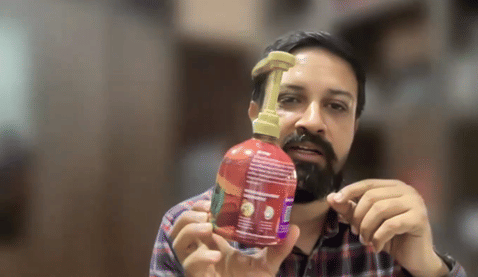
Kuldeep Chaudhary, co-founder of Chikmagalur-based Amyra Farms shared the severe operational friction independent brands face in India when sourcing high-precision packaging, urging a fundamental shift in the manufacturing mindset.
During the recent PrintWeek-HP webinar, Chaudhary explained his struggle when trying to produce a seemingly simple item: "A small plastic cap with an inner seal. Nothing complex. Just precision and consistency. I thought, "How hard can it be to get this made in India?" It turns out, very hard.
He revealed that local manufacturers consistently demanded "Minimum order 5–10 lakh pieces per month," an impossible commitment for a product still in the testing phase. This forced him to look outside India, noting a hard contrast in China where suppliers were "willing to produce even 500 pieces," offered better quality, faster sampling, and were "more openness to iterate."
Chaudhary concluded that this gap is about mindset, not geography. For Indian manufacturing to compete globally and foster innovation, he asserted a need for: Low MOQs for startups and innovators; plus faster prototyping cycles, flexibility over rigid volume-first thinking and partnership mindset, not just order-taking.
Chaudhary added that "innovation doesn’t start with 10 lakh units. It starts with 100. Then 500. Then scale."
To mitigate these local manufacturing limits, Chaudhary also offered a parallel solution for startup brands: embracing technology. He urged the packaging industry to roll out frictionless, automated web-to-print portals. By utilising standardised, pre-built pouch templates, small brands can bypass complex dieline setup steps, shifting the conversion model toward an on-demand service and reducing initial prototyping expenses.