


How robotic laser engraving is transforming Afflatus Gravures
By integrating robotic laser engraving line at its plant in Noida, the pre-press giant, Afflatus Gravures brings about 25% reduction in ink consumption, and significantly higher production volumes
04 Mar 2026 | By Abhay Avadhani

Afflatus Gravures brings design, pre-press, and cylinder manufacturing under one roof
Afflatus Gravures was founded in 2003 with a vision to revolutionise gravure and flexo printing in India. Starting with a single plant in Noida, the company expanded to Chennai in 2006, Vapi in 2011 and Kolkata in 2017. In 2018, it introduced robotic laser engraving and full HD flexo technology, followed by multiple PrintWeek Awards between 2023–25.
Afflatus specialises in manufacturing gravure cylinders, flexo plates, embossing dies and prepress design services. Financially, the company reports INR 190 crore + revenue (FY 2024). The client base includes leading FMCG and packaging converters like Nestle, Patanjali, ITC, Pepsico, Tata, and Adani Wimar. The company employs over 1,047 people across four plants equipped with robotic engraving lines and TUV SUD, Sedex certified company.
According to Rajendra Singh, GM - operations, Afflatus Gravures, Noida, operates as the central R&D hub focusing on laser engraving development process optimisation and sustainability initiatives. Vapi, Chennai and Kolkata are supported by dedicated production quality and process improvement teams. Ongoing improvement efforts focus on automation standardisation and operational efficiency across all locations.
Afflatus’ production planning is managed through centralised PPC and ERP-driven workflows. Forecasting is supported by data-based planning tools. Real-time tracking helps the company control costs, improve visibility and support timely execution across operations.
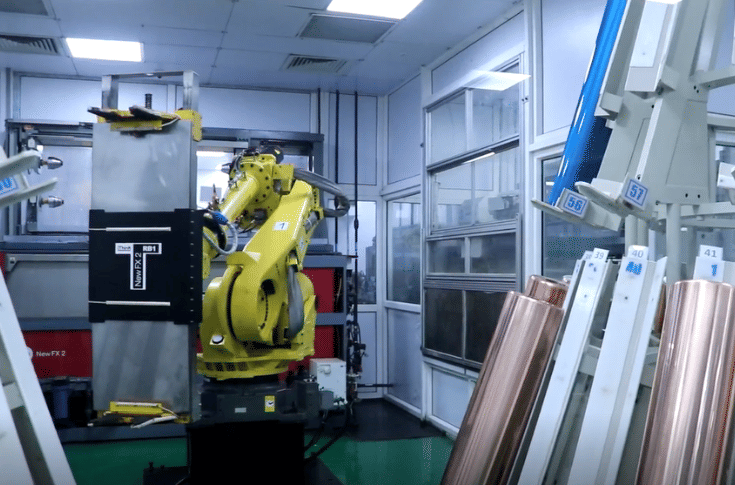
A technological leap for Afflatus Gravures was being one of the first in India to install a robotic laser engraving line project in Delhi NCR. This installation has transformed its rotogravure cylinder manufacturing process, enabling engraving precision, up to a 25% reduction in ink consumption, and significantly higher production volumes.
The automation eliminates manual inconsistencies and reduces turnaround time to an industry-benchmark of just 24-36 hours. This project was entirely envisioned, led, and implemented by the Afflatus Gravures team. Singh believes that the manufacturing of gravure cylinders has advanced with the adoption of robotic laser engraving, improved chrome plating, and tighter process controls. He says, “These developments have enhanced engraving precision, consistency and cylinder durability while improving ink transfer efficiency.”
He specifies the advantages of the robotic laser engraving technology: Improves process consistency and repeatability. It enhances overall cylinder quality and engraving accuracy and reduces manual intervention. It enables precise and uniform cell geometry. It supports better ink transfer and stable print performance. It also helps achieve improved turnaround time and supports efficient day-to-day production operations.
Additionally, he says, the optimised cell geometry also supports an effective transition from solvent-based inks to water-based inks, delivering a 20–25% improvement in printing efficiency, along with reduced ink consumption and more stable on-press performance. One of the verticals of Afflatus Gravures is the supply of rotary and flat embossing dies. According to Singh, rotary and flat embossing dies are used in premium cartons, decorative laminates and luxury packaging applications. These solutions enhance visual appeal, tactile finish, brand differentiation and security features to enhance security options.
What Afflatus does differently?
Afflatus Gravures follows an integrated approach that brings design, pre-press, and cylinder manufacturing under one roof. This coordination allows artwork to be optimised for gravure and flexo processes, improving print accuracy and consistency on press. With advanced robotic engraving technology, a full job can be executed within 12 hours and with electro-mechanical engraving, the complete job cycle is achieved within 48 hours while maintaining quality, reliability and performance.
Singh also sheds light on the company’s sustainability initiatives, such as the adoption of water-based ink systems across operations. He shares, “Corrugated sheet usage has been streamlined, and fibre drum consumption has been reduced through structured reuse practices, achieving a 95% reduction over the last three years.” According to him, all plants operate on a zero water discharge model, ensuring responsible water management and long-term sustainability while maintaining consistent production performance.
Detailing and production
“Afflatus cylinders deliver high precision engraving that supports intricate detailing and sharp image reproduction. They are engineered for stable performance during large volume production and maintain consistency at high press speeds,” says Singh. The cylinders aim to perform reliably across a wide range of substrates, ensuring uniform ink transfer and dependable print quality in demanding applications.
Afflatus believes savings on press are achieved through optimised cell geometry and precise laser engraving that ensures controlled ink transfer. This results in reduced ink consumption, lower print waste and improved consistency throughout the print run. Singh adds that stable engraving structures also help minimise press adjustments, leading to efficient production and reliable output.
Design backend and challenges
The design service is supported by a dedicated team of around 80+ skilled professionals. The team has experience in handling complex designs, detailed artwork, advanced security and anti-counterfeit design requirements. This approach, according to Singh, delivers unmatched design quality, reliable print performance and consistent results, which the company is widely known for in the industry.
Rajendra Singh explains some of the production challenges, such as delays in OEM spare parts availability. He says, supply chain dependency on raw materials and critical spares remains a major challenge. However, to overcome these pains, he adds, “Strong internal planning supported by a capable technical team and advanced systems helps ensure continuity of supplies and allows effective rotation of turnaround time without disrupting operations.”
To address these challenges, according to Singh, a wide base of converters across multiple segments is successfully using Afflatus’ solutions. What stands out is consistent cylinder quality, improved ink transfer and stable print performance across long and repeat runs. Ongoing technical support helps reduce press downtime, improve turnaround time and maintain uniform print results, which strengthens operational efficiency and production planning.
Process expertise
Singh focuses on automation opportunities in the pre-media segment, such as artwork verification, colour management and file processing. He believes automated proofing and data-driven pre-media workflows help reduce manual errors. Integration between pre-press systems and production planning improves speed and consistency.
But when it comes to different processes, Singh affirms, “Flexo offers faster readiness for short and medium print runs. Plate making cycles are quicker than gravure.” He says, this helps improve speed to market for time-sensitive jobs. Gravure continues to remain strong for long runs where consistent quality and high volume efficiency are critical.
Performance of Noida's laser engraving line
Engraving precision: ±1 micron
Turnaround time: Reduced to 36-48 hours (industry benchmark)
Ink savings: Up to 25% reduction in ink consumption
Monthly capacity (Noida line): Estimated 7,250 cylinders/month
Annual output (Across all plants): Over 2,10,000 + cylinders and flexo plates
Rajendra Singh's tips for ink transfer
- Maintaining accurate cell geometry is critical for controlled ink transfer.
- Laser-engraved cylinders help achieve uniform ink release.
- Regular press calibration and monitoring of viscosity support consistent print quality.
- Process discipline plays a key role in reducing variation during production.