Additives, testing and machines: Indian Packaging Summit kicks off
The SIES School of Packaging (SOP) marks its silver jubilee with the launch of the Indian Packaging Summit (IPS) on 17 March 2026 at the CIDCO Convention Centre
17 Mar 2026 | 984 Views | By Abhay Avadhani
The debut technical session focuses on the critical intersection of raw material innovation, speciality additives, and proactive risk management in packaging supply chains. The session highlights the transition toward risk-based analysis and the adoption of graphene-enhanced polymers to address the global plastic waste challenge.
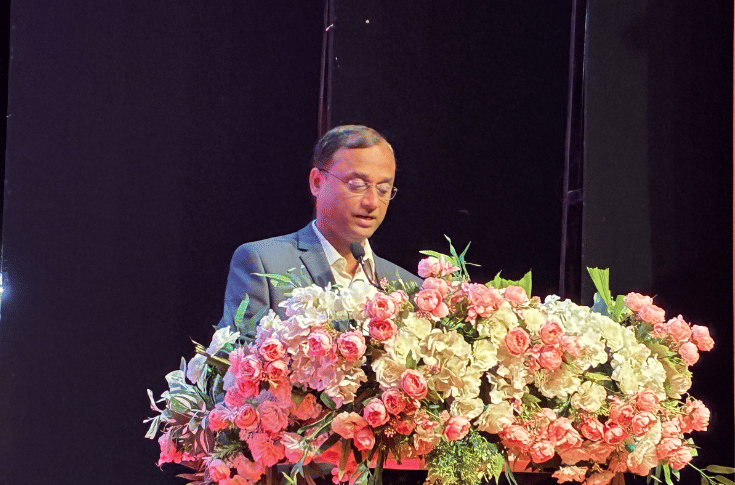
Unmeet Khambadkar says sustainable packaging is no longer an option but an urgent necessity to prevent the overuse of resources
Unmeet Khambadkar, chief manager of technical services at Indian Oil Corporation (IOC), says that packaging waste accounts for a 70% contribution to the global waste stream. With over 430-million tonnes of plastic produced annually, he warns that global waste generation could triple by 2030.
To mitigate this, Indian Oil is developing next-generation materials, including graphene-enhanced PE and PP. Khambadkar highlights BOPE as a recyclable replacement for traditional multi-material laminates and metallised structures. A significant breakthrough is the company's patented "Cycloplast" technology.
This process enables the integration of multi-layer plastic (MLP) waste into high-barrier HDPE structures, which are currently being utilised for LPG cylinders. Additionally, the company is launching phthalate-free high-clarity PP-RCP grades to ensure product safety and clarity.
The role of biodegradable additives
Rupali Hande, manager of regulatory affairs at Nichem Solutions, discusses how speciality additives can drive the transition toward a circular economy. She introduces BioX, a biodegradable additive that facilitates the breakdown of plastics in both aerobic and anaerobic environments.
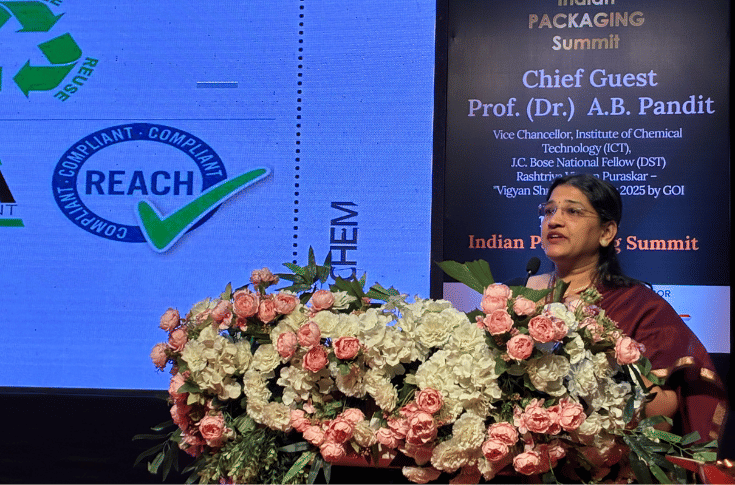
Rupali Hande, manager of regulatory affairs at Nichem Solutions
Hande shares a technical case study where BioX-treated film achieved 92.38% degradation over an 800-day period in anaerobic conditions, such as a landfill, without the generation of microplastics. She notes that life cycle assessment (LCA) data ranks this biodegradable LLDPE as the second-best environmental performer in its category.
Packaging materials - Compliance beyond testing
Vijay Bhujale, senior vice president of technical at GVS Cibatech, argues that the industry must evolve beyond simple rule-based compliance. He advocates for a proactive, risk-based approach to packaging safety. Bhujale shares several analytical case studies to illustrate hidden risks in the supply chain.
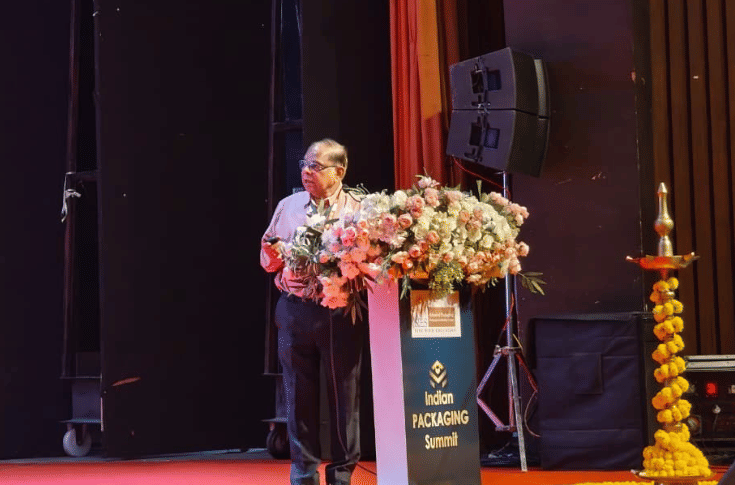
Vijay Bhujale, senior vice president of technical, GVS Cibatech
In one instance, he details how diisopropylnaphthalene (DIPN) migrated from recycled cardboard into cereal products. In another case involving bad odours in polymeric materials, Bhujale explains how TDS-GC/MS analysis identified hydrocarbons and heptanone as the primary smelling agents.
He also highlights a supply chain issue where benzophenone was detected in final products via a scan of the labels. Bhujale says that while additives are necessary for barrier properties, a proper balance and expert analytical testing are required to ensure materials are fit for food and pharmaceutical use.
Machinery and mono-material transitions
The session also explores how machinery is adapting to eliminate non-recyclable materials like PVC.
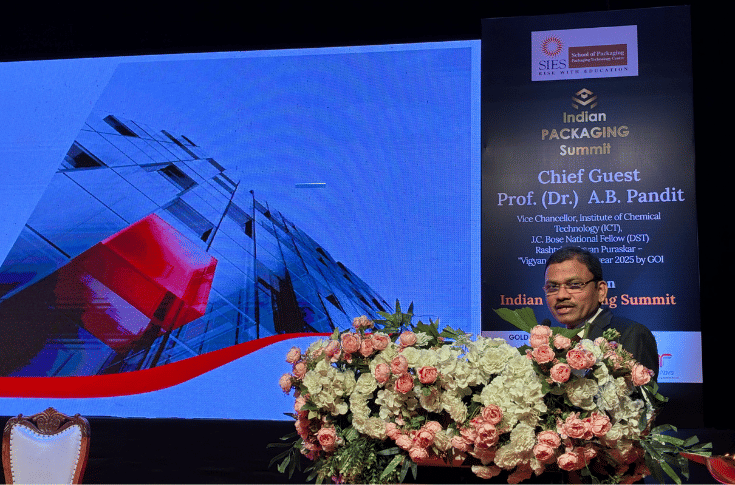
Ravindra Alve, general manager of sales and marketing at IMA-PG
Ravindra Alve, general manager of sales and marketing at IMA-PG, demonstrates the “Ecopack” automatic cartoning machine. The system is designed to handle medical devices and pre-filled syringes (PFS) using paper trays, thereby eliminating the need for a PVC-formed cavity. Alve says this technology supports the industry's shift toward PVC-free blisters utilising mono-materials such as PE-PE or PET-PET structures.
The technical deliberations, chaired by professor Bhagwan Jogi, registrar of ICT, conclude that the future of the Indian packaging sector depends on a combination of material science, precise additive balancing, and rigorous risk-based testing protocols.