


G7 calibration: Dr Akshay Joshi’s call to trust the process
By prioritising tonality and grey balance over traditional density, G7 ensures global brand consistency and operational efficiency
04 Mar 2026 | By Prabhat Prakash

Unlike traditional methods that rely on density or dot gain, G7 focuses on achieving target L*, a*, and b* colour values
In a technical session delivered at the GRA Talks Factory hosted by Pelican Rotoflex in Rajkot on 13 February, Dr Akshay V Joshi, faculty, printing and packaging department, Pune Vidyarthi Griha’s College of Engineering, Technology and Management, explored the critical shift from traditional printing methods to measured, predictable outcomes. Traditionally, the printing industry has relied heavily on the individual skill of the operator. While expertise is valuable, this dependency often leads to inconsistencies between different operators, shifts, and reproduction attempts. To bridge this gap, Dr Joshi advocated for adopting G7 Press Calibration, a methodology designed to align pre-press and press operations by replacing mutual trust with process trust.
The fundamentals of G7
G7 is defined as a device-independent calibration methodology. Its versatility allows application across any printing process, substrate, cylinder, plate, ink set, plant, and geographical location. The nomenclature itself reveals its core focus: the 'G' represents grey, and the '7' refers to the primary process colours of CMYK, plus the three RGB overprints.
Central to this method are two key elements: tonality and grey balance. Tonality refers to the lightness or darkness of a colour, represented by L values, while grey balance ensures that cyan, magenta, and yellow combine to create a neutral grey without colour shifts. Unlike traditional methods that rely on density or dot gain, G7 focuses on achieving target L*, a*, and b* colour values. This approach allows printers to address common issues such as greys appearing too reddish, greenish, or bluish, while ensuring a consistent visual appearance across different presses and production conditions.
Driving brand consistency and sustainability
The benefits of the G7 extend far beyond the technical mechanics of the press. For global brands, consistent colour reproduction is vital for shelf recognition and consumer trust. By aligning tonality and grey balance control, G7 calibration ensures consistent colour appearance across different production environments, enhances brand recognition, builds consumer trust, and supports long-term brand loyalty.
Furthermore, the methodology serves as a significant driver for operational efficiency. By reaching a colour match faster, printers experience reduced setup times and lower energy consumption. This optimisation leads to a decrease in the waste of expensive substrates, inks, and solvents. Consequently, the calibration process not only improves the bottom line by minimising make-ready waste but also assists companies in reducing its overall carbon footprint.
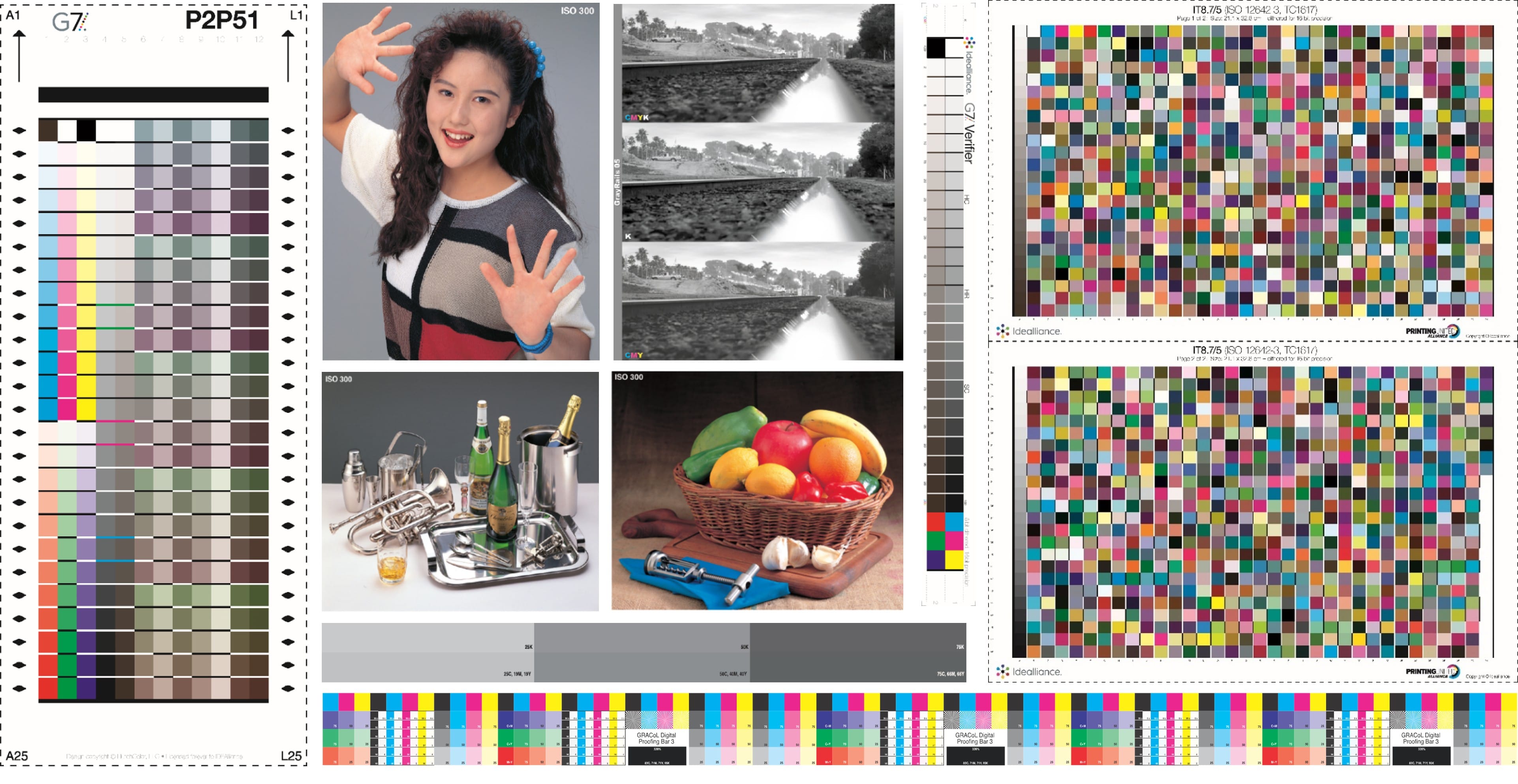
For global brands, consistent colour reproduction is vital for shelf recognition and consumer trust
Requirements for press stability
Dr Joshi emphasised that calibration must be supported by stable and controlled press conditions. This foundational stability requires meticulous attention to mechanical factors such as the alignment of rollers and cylinders, the proper functioning of pneumatic systems, ink pumps, viscosity control, and the integrity of the doctor blade.
Other critical variables include accurate tension control and high register accuracy. Even environmental factors and maintaining a constant press speed play a role. Without a stable mechanical baseline, any attempt at digital or tonal calibration will fail to produce repeatable and predictable results.
A practical case study
To illustrate the effectiveness of the G7 methodology in the gravure printing process, Dr Joshi presented a case study involving a 12-micron PET substrate printed using electronically engraved gravure cylinders. GRACoL 2013 CRPC6 specifications served as a reference for G7 targeted compliance, using spectrophotometer measurement settings such as D50 illumination, 2° observer, and M1 measurement mode.
In run one, although the CMYKRGB solids matched the specified aim values (ΔE00 tolerances), the grey balance failed to meet the required tolerances and showed the presence of bluish, reddish, and greenish colour casts in the CMY overprints. The tonality of the printed sample for CMYK showed the deviation from the ideal neutral print density curve (NPDC) and inconsistent greyscale reproduction. This confirms that matching solid ink densities alone is insufficient to achieve neutral tonality, as the tonal response of the press differed from the G7 reference condition.
Based on the measured deviation, tone curves were generated, and run two was conducted under controlled press conditions. The results demonstrated close alignment between the NPDC of the measured printed sample and the G7 target curve. Both tonality and grey balance fell within acceptable ΔE00 tolerances, confirming G7 targeted compliance.
The transition to G7 calibration enabled a reliable proof-to-press match, contributing to improved production efficiency and predictable colour reproduction. By replacing subjective trial-and-error adjustments with measurement-based process control, converters can achieve faster approvals, reduced material waste, lower operational costs, and enhanced customer satisfaction.
This case study demonstrates that G7 calibration can be successfully implemented in the gravure process, enabling predictable and repeatable tonal reproduction across varying materials and process conditions under stable press operation.