


A bullish outlook: Key trends driving India's packaging machinery sector
The corridors of PackMach Asia Expo and Drinktec India 2025 this year, were buzzing not just with machinery, but with a clear consensus: India’s packaging machinery sector is entering a new, hyper-efficient, and sustainability-driven phase of growth. Interviews with industry leaders reveal what’s taking shape
15 Dec 2025 | By Abhay Avadhani

The Indian packaging machinery industry has matured from merely seeking machines to demanding comprehensive, smart, and sustainable engineering solutions
These conversations reveal a market undergoing rapid transformation, powered by a post-Covid push for automation, an unwavering focus on quality, and aggressive expansion plans from domestic and international players alike.
The overriding narrative from the show is a transition away from traditional, labour-intensive methods towards smarter, more reliable, and greener solutions.
The post-Covid race for reliability
A core driver of the industry's dynamism is the necessity for reliable, mechanised end-of-line processes. Ravindra Rote, director at Pune-based Rote Packtech, emphasises this shift, noting that customers now demand “a more sustainable end-of-line and reliable end-of-line.” The imperative, he explains, stems from the fact that a failure at the final packing stage can collapse the entire production supply chain, especially with higher throughputs.
This is where automation providers see the biggest opportunity. Vijay Ram Balasundaram, founder of Coimbatore-based Synapse Robotics, highlights that while Indian producers invest heavily in primary packaging (filling lines), secondary and tertiary packaging—such as case packing and palletising—are often neglected and still accomplished manually.
"The labour intensive work of the lifting of the heavy weights for the palletising, I think will slowly get transformed into robotics and automation,” states Balasundaram. Synapse Robotics, which exports to the US and Middle East, is addressing this need with fully customised solutions, relying on a strong in-house design team that spends up to seven weeks on conceptualisation and 3D simulation before any manufacturing begins.
Rote Packtech, which showcased its latest palletiser and lorry loading/unloading systems, is poised to capitalise on this boom. The company, already exporting to over 12 countries, is aiming for a USD 12-million turnover within the next seven years.
While Amit Khadilkar, managing director, Clevertech PAS, emphasises on the point that palletising solutions come into place for special products such as naked cans, or naked bottles. In those cases, palletising becomes a primary requirement in the line. Khadilkar continues, “There are two aspects: Either we need to have a high speed operating setup, or we need to have a high complex operational setup. That's where we become relevant.”
Ambrish Rupak, GM sales, Clearpack Automation believes that customers are going for smart automation and sustainable packaging in India, this is driven by rise in eCommerce and its growth. He says, “Keeping up with this trend, we are aligning all our solutions to all these fast market expectations.”
Clearpack is one of the leading packaging and bottling equipment suppliers for personal care, home care, food, beverages, pharmaceuticals, agrochemicals, paints, lube oil, and edible oil. It supplies a complete packaging line, starting with unscrambling, filling, capping, and labelling.
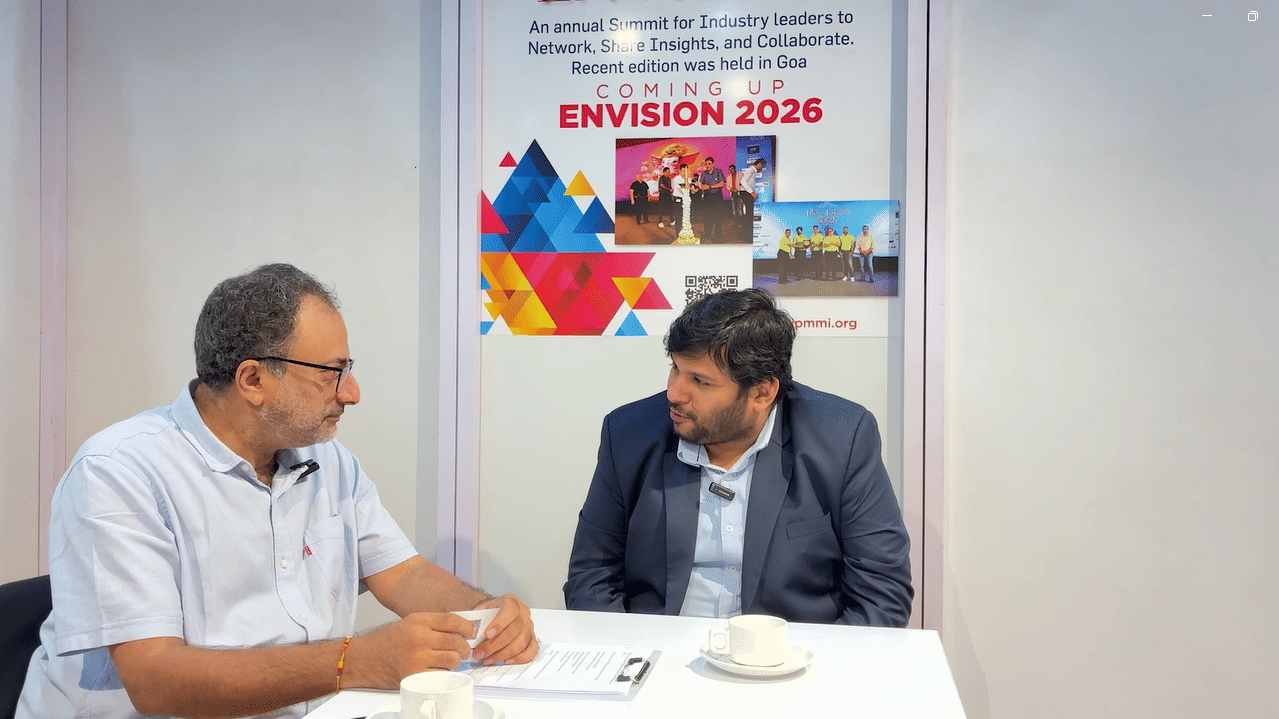
Amit Khadilkar, managing director, Clevertech PAS
The unstoppable force of sustainability and quality
Across the board, companies framed their technological advancements through the lens of sustainability and uncompromised quality.
Drumil Kaloo, sales head - EWS India, Cyklop, a century-old German company, provides a clear example, stating, “We are the company who have brought in paper straps, avoiding plastics by all means.” He notes that this innovation, which replaces plastic, is essential for the Indian market and is part of a broader drive to raise the industry's quality bar.
Kaloo also paints a bullish picture of the market, projecting a minimum 17-18% CAGR for the Indian packaging industry over the next five years. To meet this demand, Cyklop has immediate plans to open a manufacturing plant in India for consumables within the next two years.
For Festo, sustainability is a business model. The national sales manager, Ranjan Singh Chadda explains that the company’s engineering services start with an energy audit to help customers make existing machines sustainable. By deploying devices like the energy efficiency module (e2m), Festo helps manufacturers address issues like pneumatic leakage, which can account for 20-25% of energy consumption. Chadda assures that even with a potentially high initial cost for upgrades, the savings can often deliver a ROI within one year.
Quality, however, remains the non-negotiable foundation. Gurunath Keshanur, director at Goa-based Unique Equipments, highlights the necessity of adhering to stringent global compliance standards like GMP, HACCP, USFDA, and CE marking for their metal detection systems, which are vital for food and pharmaceutical safety. The company, established by five former colleagues in 1999, now boasts 7,000 customers, crediting its success to both product quality and its 24-hour service response time. Looking ahead, Unique Equipments is planning to introduce an X-ray inspection machine to the market within a year.
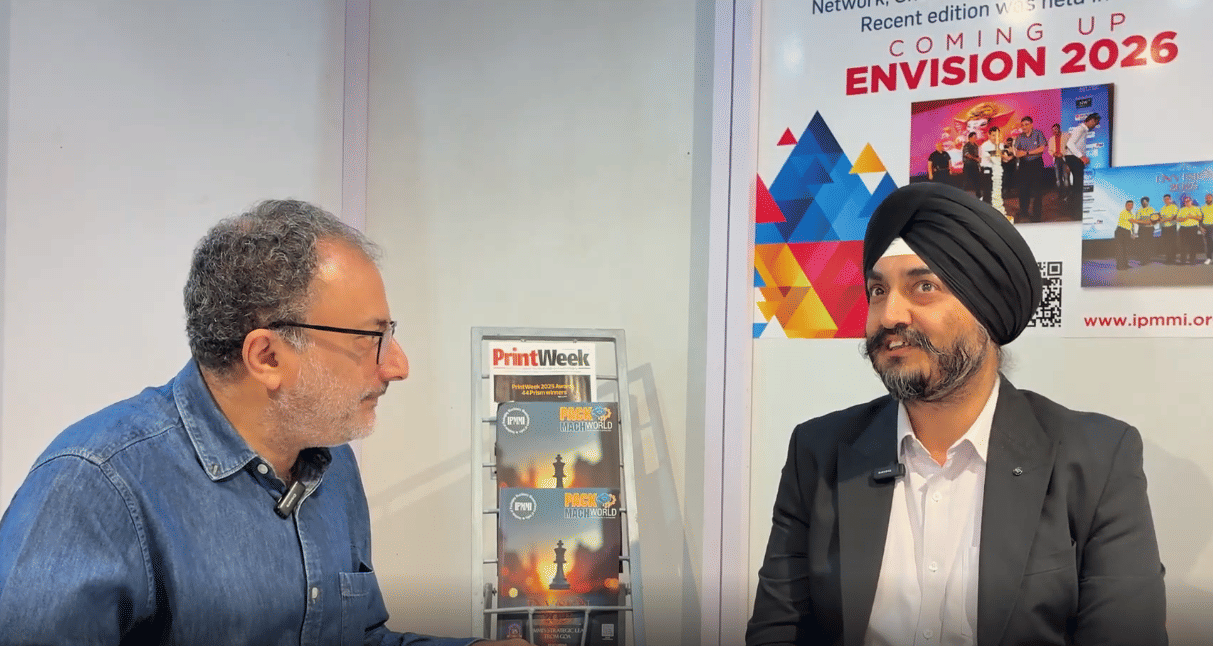
Ranjan Singh Chadda, national sales manager, Festo India
The technology leap: From AI to 100% inspection
The complexity and sophistication of the machinery on display reflected a sharp move towards Industry 4.0. Festo showcased its “no-code” palletiser—a system that allows operators to easily change palletisation routines via a simple software interface—and its concept of “seamless connectivity,” integrating different communication protocols (Profibus, Profinet) with its range of pneumatic and electrical components.
The company’s Festo Insight module provides predictive maintenance by giving an early alarm on cylinder health, a major factor in reducing costly downtime.
Meanwhile, Valco Melton launched a vision inspection system that combines visible light with infrared thermal imaging. Dan Gardner, representing the company, explains that the system is critical for modern packaging, especially flexible pouches made from new, sustainable, or recyclable materials.
“We take that unknown and we put it in front of everyone's face,” Gardner says, emphasising the system’s ability to conduct 100% inspection of every bag, checking for defects in seals, zippers, and even microscopic debris—a vital tool for maintaining quality in food and pharmaceutical products. The system is proprietary, with Valco Melton designing both the software and the special two-in-one camera.
Krunal Patel, director, Conveline Systems speaks about the different types of conveyors such as gravity roller conveyors, powered roller conveyors and accumulation roller conveyors. Depending on the product weight and behaviour, we can select the power application. Accumulation conveyors are used where high-end automation is needed. Patel says, “India is growing rapidly for conveyor automation and end of line automation.”
The innovation hurdle
While the market's trajectory is clear, challenges remain. A recurring theme was the difficulty in prioritising innovation in a price-sensitive market. Vinod Vazhapulli, cofounder and managing director of the five-month-old PrintMach, argues that “innovation is highly undervalued in India.” He points to the struggle to sell products like sustainable PCR film, where customers often expect a 30-40% discount, undercutting the entire premise of innovation.
Despite this, PrintMach is forging ahead with a vision to become a one-stop solution for all packaging machinery needs. The company, which is already working with large companies in alco-bev, FMCG, and petrochem, has hired a chief innovation officer to focus on building high-speed, affordable machines—such as a 400-500 bottles-per-minute labeler—that can compete directly with European manufacturers.
Ashutosh Gupta, business development executive at AG Group, a 37-year-old manufacturer of components like rollers and conveyors, echoed the focus on technical engagement over price. “We go on to first getting the hang of what the customer really wants,” he says, describing a lengthy, knowledge-intensive process of technical consultation. To maintain its edge, AG Group focuses on launching new products and technology every year and is currently expanding its factory by one lakh square feet.
Finally, the critical issue of the skill gap was addressed. Festo, celebrating its 100th year globally and opening a new 80-acre factory in Bangalore, highlights its efforts to develop the future workforce. Chadda details the company’s vocational training academy, which takes people from lower-income backgrounds and trains them over two years in technologies ranging from lathe operation to robotics, ensuring they are job-ready and, in many cases, absorbed by Festo itself.
The overriding sentiment at PackMach Asia Expo and Drinktec India 2025 is that the Indian packaging machinery industry has matured from merely seeking machines to demanding comprehensive, smart, and sustainable engineering solutions—a transformation that promises rapid, quality-led growth over the next decade.