


How Ball is building its India growth engine
Manish Joshi, regional commercial director, Asia at Ball Beverage Packaging India, outlines how rising beverage demand, sustainability economics, and advanced manufacturing are shaping Ball’s long-term India strategy, with Sri City and Taloja emerging as anchors for capacity, innovation, and circular packaging
24 Feb 2026 | By Noel D'Cunha

Ball’s total investment in India now exceeds USD 100-million
Noel D’Cunha (ND): In an earlier interaction with PrintWeek and WhatPackaging?, it was clear that Ball India has moved from exploratory scale to strategic scale, especially after the Taloja upgrade in 2024. With a fresh USD 60-million investment in Sri City, the market is no longer an experiment but an accelerator. What are the core strategic drivers behind this expansion and what convinced you that India is ready for another major capacity build?
Manish Joshi (MJ): India is one of the fastest growing consumer markets in Asia, and this momentum is accelerating the shift towards sustainable, high performance beverage packaging. We are seeing rapid growth across beverage categories such as carbonated soft drinks, energy drinks, brewed beverages, dairy based drinks, and ready to drink formats, driven by premiumisation and evolving consumption habits.
ND: How important has the shift towards aluminium cans and sustainability been in shaping this investment decision?
MJ: There is a clear increase in consumer and brand preference for aluminium cans as a more sustainable alternative to materials with weaker environmental credentials. This shift aligns closely with global sustainability goals and reinforces aluminium’s role as a high performance, fully recyclable packaging format in India.
ND: What role did the performance of the Taloja facility play in building confidence for the Sri City investment?
MJ: The proven success of our Taloja facility demonstrated scalability and operational reliability, giving us confidence in the maturity and long-term potential of the Indian market. With the additional USD 60-million investment in Sri City, Ball’s total investment in India now exceeds USD 100-million. Construction and commissioning at Sri City are expected to be completed within two years. Once operational, the facility will double Ball’s annual production capacity in India and support accelerating demand from both global and domestic beverage brands. The expansion also reflects our commitment to sustainability and innovation, including the deployment of retort technology for dairy and ready to drink beverages, which are experiencing rapid growth in the region.
ND: Ball’s global strategy places aluminium at the centre of its long-term growth. India plays a very different role compared to Latin America, Europe, or the US. What makes India structurally distinctive?
MJ: India’s scale, young demo- graphics, and rapid economic growth set it apart. Unlike more mature markets, India is still at an early stage of beverage can adoption, but adoption is accelerating rapidly towards fully recyclable formats.
ND: Industry reports project beverage cans in India to grow at 10% annually over the next five years. How is Ball positioning itself to capture this growth?
MJ: This growth reinforces the need for strong domestic manufacturing capacity. Ball’s expansions in Taloja and Sri City provide the scale required to meet rising demand with speed and consistency. Both facilities support a broader mix of beverage formats, including categories enabled by retort technology, and are aligned with Ball’s sustainability standards. At the same time, we are strengthening supplier partnerships, localising key inputs, and investing in local talent to enhance operational capability. This integrated approach improves service reliability and supports the next phase of market growth.
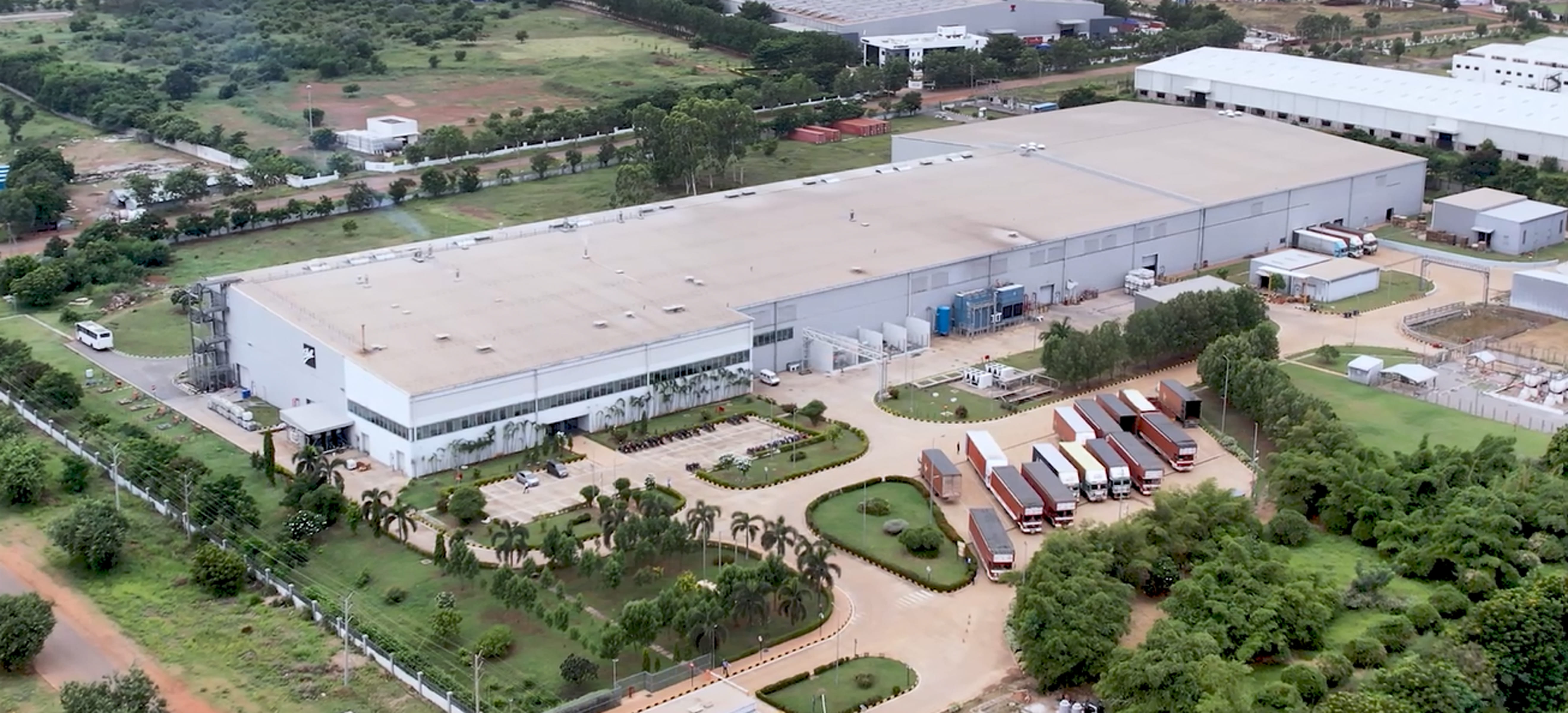
Expansions at Taloja and Sri City improve resource efficiency and support the shift towards higher recycled content within the aluminium value chain
ND: What are your expectations around utilisation, ramp-up, and return on investment?
MJ: Utilisation is expected to increase progressively as demand for recyclable beverage packaging rises. Ramp-up will be phased and aligned with customer requirements, ensuring capacity comes online in a disciplined manner. Return expectations are linked to sustained growth in India’s beverage sector, supported by efficient scale-up and sustainability-focused operations.
ND: Ball has experience with both brownfield and greenfield investments. In India, each model carries its own regulatory, vendor and infrastructure learning curve. How are you balancing these investment models and what lessons from Taloja are guiding Sri City?
MJ: Our approach combines the speed of brownfield upgrades with the long-term advantages of greenfield development. Learnings from Taloja, particularly around vendor onboarding, regulatory navigation, and sequencing, are guiding Sri City’s development. Sri City integrates advanced systems such as heat pump technology and is supported by a strategic investment of approximately USD 60-million under a Memorandum of Understanding with the Government of Andhra Pradesh. This investment strengthens Ball’s local supply chain, creates employment opportunities, and positions Sri City as a hub for Asia. India’s fast-moving market demands agility and innovation. By co-creating solutions with customers and backing that up with local investment in capacity, supply chains, and talent, Ball aims to ensure consistency, quality, and sustainable growth across both sites.
ND: India’s lines operate at very high speeds of 1,800 to 2,200 cans per minute, which places them among the fastest in the region. How do you adapt this capability to local conditions?
MJ: Our focus is on quality and operational reliability. Advanced process control and disciplined line management ensure consistency across a diverse beverage landscape. Both facilities are designed to accommodate multiple can sizes and formats while meeting international quality and safety standards. Continued investment in training and maintenance ensures alignment with customer needs.
ND: With aluminium sourcing, coatings, logistics, and vendor development all scaling simultaneously, how are you structuring the supply chain?
MJ: Local production reduces reliance on imports and improves speed to market. Over the next three to five years, we are focused on localising key inputs, deepening supplier partnerships, and expanding logistics capabilities.
Challenges include managing raw material volatility, scaling vendor compliance to global standards, and navigating infrastructure constraints. Sustainability principles are embedded to advance a more circular supply chain.
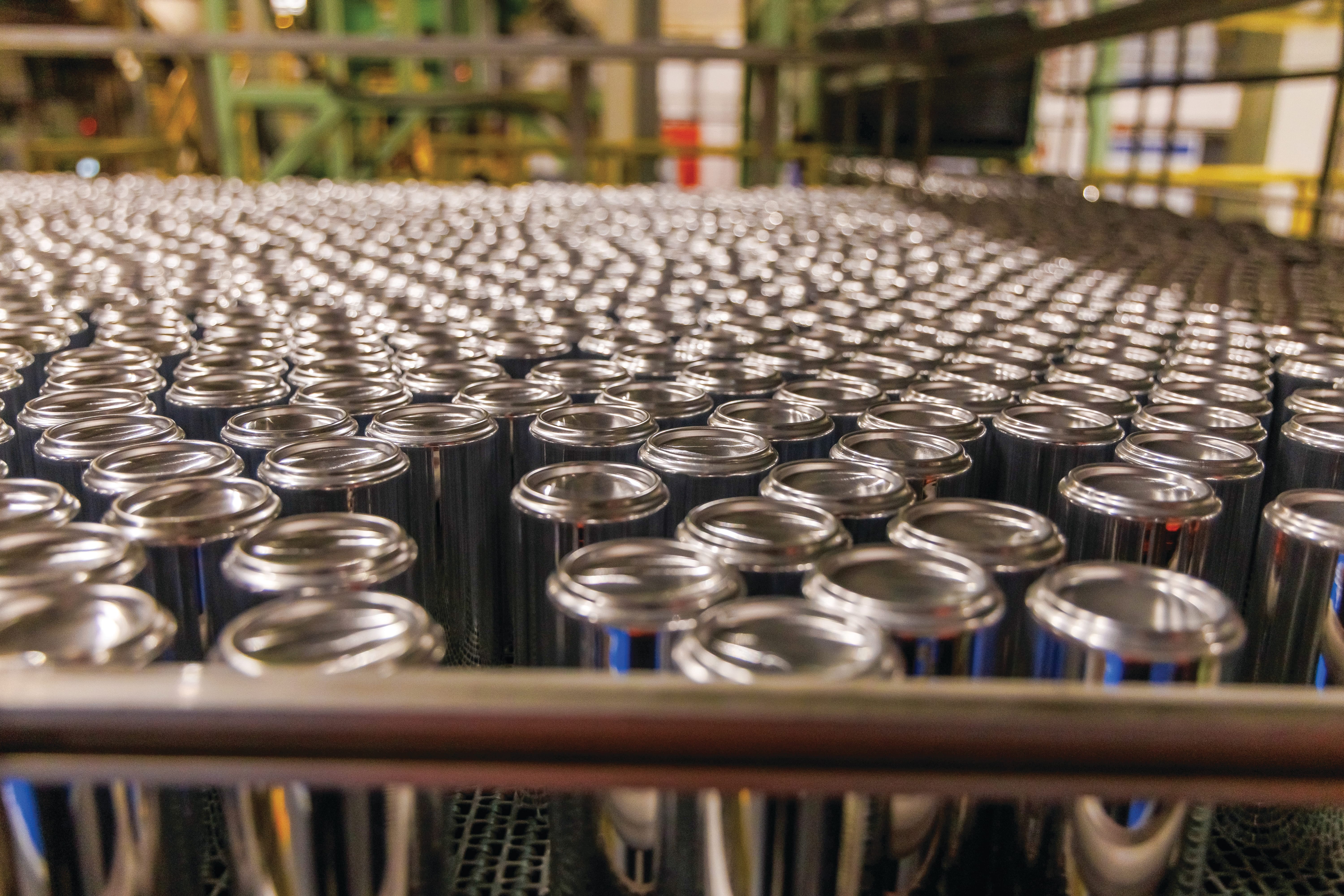
Ball produces tens of billions of cans globally and continues to invest in new production lines
ND: India’s 29 distinct markets generate a large number of SKUs and label variants, adding significant complexity. How does Ball manage this diversity without compromising cost efficiency or speed to market?
MJ: Flexible production systems and robust planning processes are essential. Our plants handle multiple can sizes and label variants efficiently, supported by advanced scheduling and inventory tools. Close collaboration with customers, high speed changeovers, and localised sourcing help maintain cost efficiency and speed to market.
ND: How does Ball manage aluminium and energy price volatility in India?
MJ: Aluminium is globally traded, so cost management requires strong discipline and close customer alignment. Domestic capacity strengthens resilience, while global hedging practices and energy-efficient technologies reduce exposure to volatility.
ND: How is Ball innovating coating and substrate technology for Indian beverage formats?
MJ: Our focus is on ensuring coatings and can performance meet the needs of a diversifying market. Retort technology enables dairy and ready-to- drink beverages to transition into aluminium without compromising quality. Lightweighting and BPA-NI coatings, combined with food-grade inks and global safety standards, support durability, shelf life, and recyclability.
ND: Where do you see smart packaging going in India?
MJ: Smart packaging in India is expected to grow rapidly as consumers increasingly embrace mobile first engagement and demand greater transparency. QR codes and interactive features allow brands to share product information, sustainability narratives, and immersive digital experiences. Ball is prepared for this transition through global capabilities such as QR code integration, Eyeris high resolution printing for premium graphics, and Dynamark variable printing for localised campaigns. These technologies are fully compatible with aluminium recycling and aligned with Ball’s 2030 sustainability goals.
ND: How many production lines and advanced printing facilities does Ball operate?
MJ: Ball operates a network of advanced beverage packaging plants across EMEA, equipped with high speed production lines and state of the art printing technology. Eight colour printing is standard across operations, and the company offers a wide range of premium finishes including metallic, matte, brushed, pearlised, and halftones, along with advanced capabilities such as Eyeris high resolution printing and Dynamark variable printing. The portfolio covers all major can sizes used across beverage categories, ranging from slim formats to larger diameters, and all solutions are fully recyclable. While specific installed capacity figures are proprietary, Ball produces tens of billions of cans globally and continues to invest in new production lines to support growing demand and sustainability goals.
ND: Although a can looks simple, it goes through nine precise manufacturing processes before it is ready for sale. Each step is critical to ensure quality, durability, and safety, making it a marvel of engineering behind its unassuming appearance. What is the Ball mantra?
MJ: Our purpose and our promise are clear: to deliver quality, innovation, and sustainability at scale. Every can is the result of a rigorous, multi stage manufacturing process designed to ensure safety, durability, and performance, reflecting our commitment to operational discipline and continuous improvement.
ND: With sustainability regulations, including EPR and recycling mandates, becoming more stringent each year, compliance is no longer defensive but strategic. How do you ensure that Ball India stays ahead of regulatory expectations in sustainability and circularity?
MJ: At Ball India, our purpose is to enable a circular economy and deliver sustainability at scale. The approach is proactive, going beyond compliance to lead on sustainability rather than respond to it. Recent expansions at Taloja and Sri City improve resource efficiency and support the shift towards higher recycled content within the aluminium value chain, aligned with Ball’s global 2030 sustainability goals. These goals include achieving an average of 85% recycled content in aluminium packaging, sourcing 100% renewable electricity, and supporting a 90% global recycling rate for aluminium beverage packaging. In parallel, Ball is strengthening traceability, collaborating closely with suppliers and recyclers, and engaging with industry platforms to advance responsible material recovery. Together, these actions ensure Ball India is well prepared for evolving EPR and recycling mandates, positioning compliance as a strategic advantage rather than a defensive obligation.