How Canopy is building India’s alternative-fibre ecosystem
With 400 brands being a part of Canopy Planet’s initiatives, the company fosters more than thousand sustainable options in terms of paper and packaging grades from mills
23 Dec 2025 | By Sai Deepthi P

Pilot projects show that with innovation and right feedstocks, one can lower the environmental footprint of packaging
First things first. Canopy's EcoPaper Database (EPD) is one of the largest catalogues of recycled content and Next Gen paper and packaging. The SPP is, the fibres are low carbon alternatives made from agricultural residues, recycled textiles, or other circular, nonwood feedstock.
Shruti Singh, India hub director, Canopy Planet, says, “It’s designed to make it simple for brands and other users to shift away from forest-derived materials." According to Singh, it also helps to identify lower-impact, lower-carbon options that keep products moving while keeping forests standing.
EPD houses more than a thousand paper and packaging grades from mills worldwide and includes technical specifications which the packaging teams need—including recycled content, certifications, bleaching, and whether a material uses alternative or circular feedstock. Users can filter by geography, application, or fibre type to find viable options and benchmark against current grades.
Singh adds, “The EPD is a practical, free tool that helps companies meet sustainability commitments, build supply chain resiliency and meet the growing market demand for lower-impact packaging.”
Singh adds, “Alongside these tools, we work directly with companies - in India as well - to develop robust forest policies, map supply chains, and integrate recycled and Next Gen alternative fibre materials into procurement decisions.”
Market scenario in India
The Indian packaging market which is expected to notch-up USD 143-billion by 2029. The growth is plentiful. Singh says that the priority lies in helping companies decouple growth from deforestation and degradation by shifting to recycled and Next Gen materials.
She believes India, already a global leader in recycled fibre, has the potential to become a hub for alternative-fibre production as well due to the availability of tonnes of agricultural residues and large volumes of post-consumer textile waste providing an abundant, domestic feedstock supply.
Canopy works with brands, producers, investors, and policymakers to build the conditions for this transition supporting new mill development, providing clear no-deforestation pathways, and offering tools that help MNCs meet global climate expectations.
The company’s goal is to have a model where Indian industry expands while safeguarding forests and strengthening farmers’ livelihoods. The company aims to help companies in reducing air pollution from residue burning, and lowering reliance on imported virgin fibre.
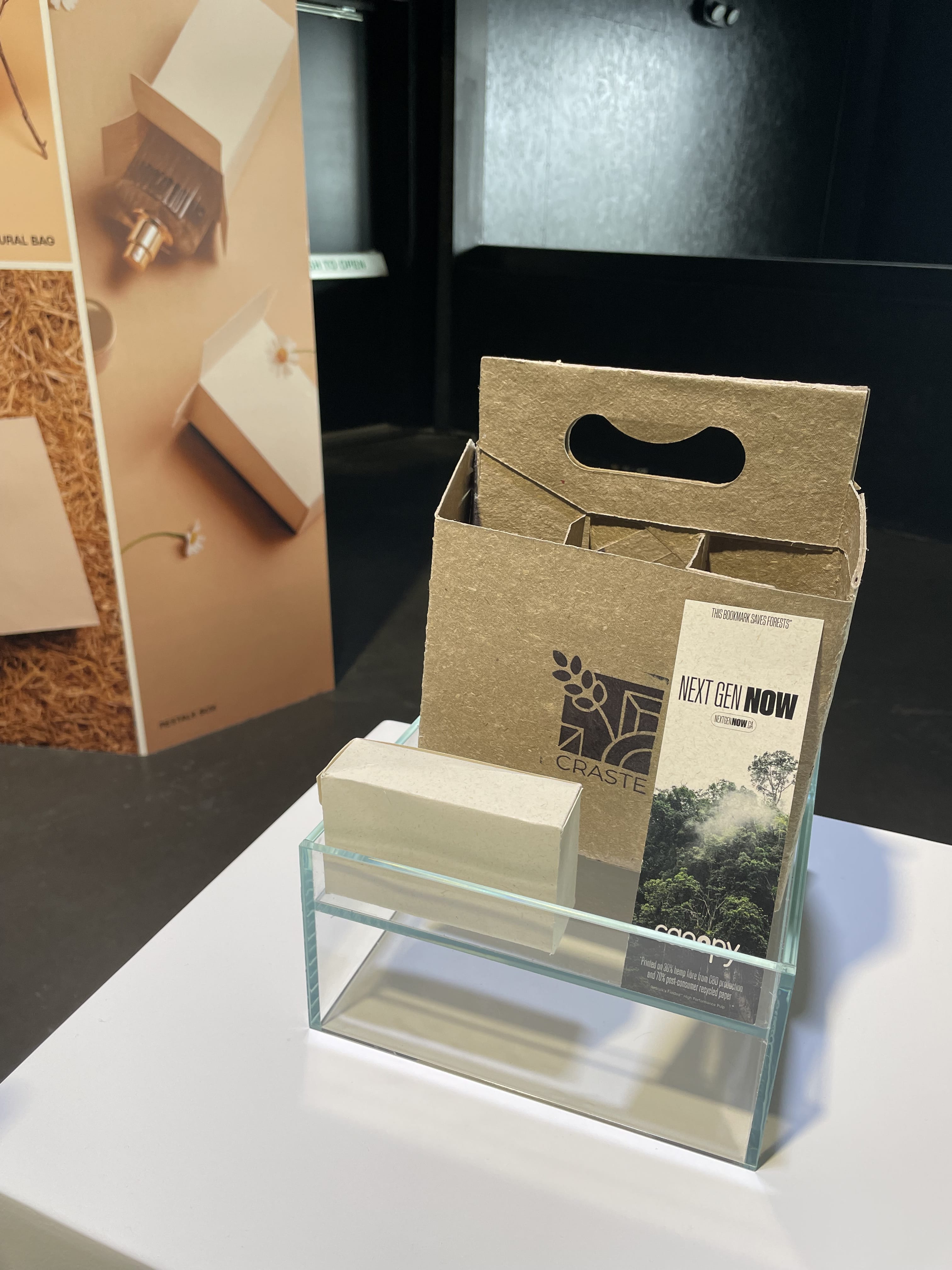
Creating an ecosystem where circular fibres are not just viable, but the default choice for packaging procurement teams
Pack4Good and CanopyStyle
Canopy has initiatives such as Pack4Good and CanopyStyle. “Our model unites hundreds of brands, retailers, and producers behind shared commitments to protect ancient and endangered forests and scale low-impact fibres,” Singh says.
She adds that companies adopt strong policies, use shared data tools - like the Hot Button Report to guide procurement, and send market signals that drive mills toward high recycled content. She believes this approach has already shifted most of the man-made cellulosic fibre (MMCF) sector into low-risk sourcing categories. It is transforming packaging markets as more brands integrate recycled and alternative fibres into their portfolios.
The Pack4Good initiative consists of over 400 brands. Singh explains, it is built on transparency and shared responsibility. “Progress is reinforced through collective market expectations: when hundreds of companies move in the same direction, accountability becomes a shared norm rather than a box-ticking exercise. For brands or suppliers that lag behind, we work directly with their teams to course-correct and ensure they stay aligned with ambitious forest-protection and materials-transition goals,” Singh adds.
Adoption of Next Gen solutions
But how does Canopy foster the adoption of Next Generation solutions, such as alternative fibres and circular materials? Singh says, “Our roadmaps show the climate, nature, and economic benefits of alternative fibres; our directories connect brands to innovators; and our policies embed recycled and Next Gen materials directly into procurement criteria.”
Canopy works with partners on product development that demonstrate real-world performance. She says the company also works with investors and policymakers to unlock the capital needed for new facilities, especially in high-growth markets like India. The result is an ecosystem where circular fibres are not just viable, but the default choice for packaging procurement teams.
Talking about the impact, Singh says, “By shifting from high carbon forest-derived to circular and alternative feedstocks, companies are reducing pressure on biodiverse forests while cutting emissions linked to logging, land-use change, and long supply chains.”
She points out that early mills and pilot projects show that with innovation and the right feedstocks, one can simultaneously improve local air quality, strengthen rural livelihoods, and lower the environmental footprint of packaging.

Next Gen fibres are low-carbon alternatives made from agricultural residues, recycled textiles and non-wood feedstock
Opportunities in India
Singh believes that India is a rapidly expanding packaging market. Abundant agricultural residues and textile waste, and technical know-how are required to make things happen. She says, “That combination makes the country a natural hub for Next Gen fibre production and a key player in global low-carbon supply chains.”
At the same time, she says, the landscape is complex - regional sourcing patterns vary widely, recycling infrastructure is uneven, and many companies are navigating new regulatory expectations. Engaging policymakers, brands, and community partners has been crucial for Canopy to unlock investment, aligning incentives, and ensuring that new fibre value chains support both conservation priorities and local livelihoods.
Innovation and sustainability
Singh believes the sweet spot for a balance between innovation and sustainability is where performance, cost, and environmental impact all move in the same direction. “That’s exactly what’s happening with high-recycled and Next Gen materials,” she says.
According to Singh, innovation means redesigning packaging with smarter feedstocks, better efficiency, and stronger end-of-life pathways. By working with brands, mills, and innovators, Canopy ensures solutions are commercially viable at scale while shrinking their footprint.
Singh says, the adoption of Next Gen fibres would help in strengthening EPR frameworks by incentivising the scale-up of Next Gen fibre mills.
Speaking about the policies, Singh adds that they reduce uncertainty and create predictable market conditions, for companies to invest confidently in new materials, infrastructure, and packaging systems that protect forests.
Circular economy
Singh believes circularity should drive decisions before product ideation. To achieve this, Singh urges brands to use high recycled content and opt for fibres that can be easily recovered — “That means asking early on: Can the product be recycled? Can it be reused? How will it be recovered? What feedstocks have the lowest impact?”.
Thinking this way shifts the industry from managing a growing waste problem to building materials ecosystems that regenerate, recirculate, and reduce pressure on forests from the start.
Shruti Singh: How Canopy helps the industry to map their supply chains
1. EcoPaper Database for better packaging options
2. ForestMapper, a geospatial platform that identifies ancient and endangered forests in sourcing regions
3. Hot Button Report, which evaluates global MMCF producers on risk and innovation
4. Next Gen Solutions Provider Directory, which connects brands to alternativefibre innovators.